
Every dollar you spend hinges on fit. Audience trust, engagement rates, and ROI all trace back to one decision: did you pick the right creator?
This guide breaks down what social media product placement actually is, the factors that separate a smart partnership from a wasted budget, and how production quality determines whether a placement converts.
Key Takeaways
- Product placement works through trust, not overt advertising
- Audience alignment beats follower count every time
- Engagement rate and content quality predict success better than reach
- FTC disclosure is a legal requirement for every paid placement
- Production quality shapes how your placement is received
What Is Social Media Product Placement?
Social media product placement means brands embed products naturally into a creator's content, rather than running a traditional ad. Think of a supplement bottle sitting on a podcast desk, or a skincare routine woven into a morning vlog.
The concept borrows from Hollywood's old embedded-advertising playbook, where products showed up organically inside movies and TV shows. Platforms like Instagram, TikTok, and YouTube have amplified that model, turning it into a measurable, trackable channel.
Types of Influencer Product Placement
Placements generally fall into a few buckets:
- Organic mentions — creator features the product unprompted, no payment involved
- Sponsored partnerships — brand pays for a dedicated feature, disclosure required
- Dedicated reviews — full product-focused content built around an explicit evaluation
- Subtle in-content appearances — product visible on a podcast set or in-frame without a hard sell
- Affiliate or TikTok Shop placements — creator earns a commission when followers buy through their link or video
Why Brands Rely on Influencer Placement
Creator content builds a level of trust that traditional ads can't replicate. Followers feel like they know the person recommending the product, which changes how they respond to the pitch.
The market reflects that shift. US influencer sponsored-content spending is forecast to hit $10.52 billion in 2025, according to eMarketer's 2025 forecast. And in CreatorIQ's 2024 survey, 66% of brands and 82% of agencies said creator content outperformed traditional digital ads in ROI over the prior year.
Beyond the sale itself, placements generate content brands can repurpose across email, paid social, and their own channels — extending value well past the original post.

What to Consider When Choosing the Right Influencer for Your Product Placement
Fit beats fame. A creator with a smaller following but the right audience will almost always outperform a big name whose followers have no reason to care about your product. These are the factors that actually move the needle.
Audience Alignment & Demographics
This is the single biggest predictor of conversion. If a creator's followers don't match your target customer's age, location, and interests, no amount of reach will save the campaign.
Ask for:
- Follower demographic breakdowns (age, gender, location)
- Audience overlap percentage with your target customer
- Interest and content-category alignment
Skip vanity reach. Prioritize creators whose followers already look like the people who buy from you.
Engagement Rate Over Follower Count
Follower count is a vanity metric. Engagement tells you whether people actually care what a creator posts.
- HypeAuditor reports 1K–5K accounts average a 4.8% engagement rate vs. 1.0% for 100K–1M accounts
- Weigh comment quality as heavily as likes-to-follower ratio
- Generic emoji spam means less than genuine questions and replies
A smaller, engaged audience converts better than a passive one, even if the raw numbers look less impressive on paper.

Content Quality & Production Value
Polished, well-lit content performs better on algorithms and reflects better on your brand. TikTok has confirmed that video completion is a stronger recommendation signal than factors like country match. A creator who holds attention for the full video matters more than a huge following.
Creators who shoot in a proper studio setup (pro lighting, multi-camera, clean audio) rather than a shaky phone selfie tend to produce content that:
- Looks more credible to viewers
- Holds attention longer
- Performs better when repurposed as paid media
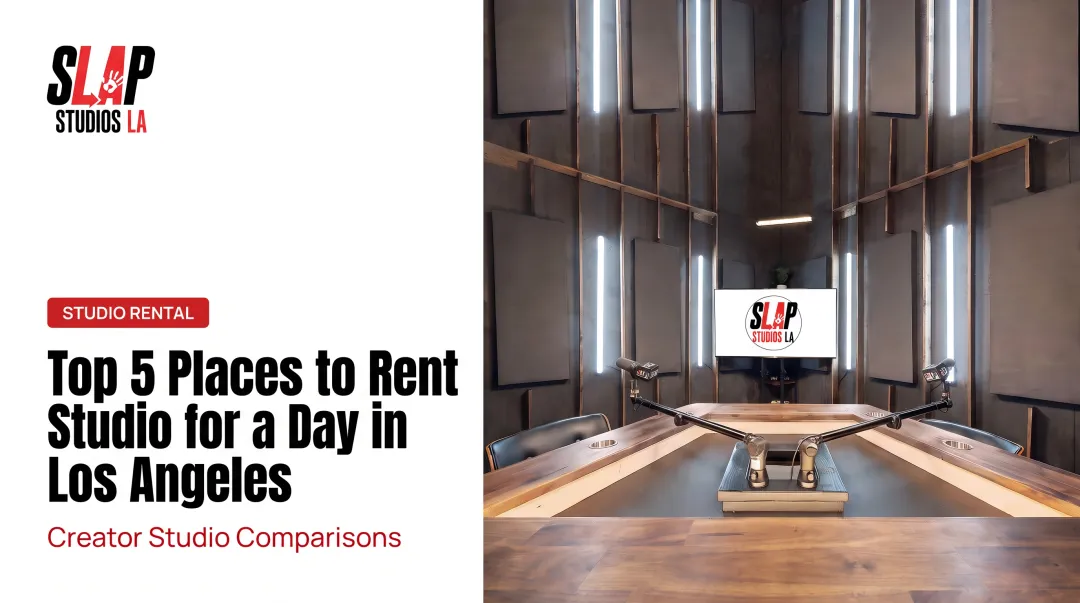
For product placement, that production gap is often the difference between content that sells and content that gets scrolled past. Brands working with creators through studios like SLAP Studios LA see this firsthand when placements are filmed with full lighting and multi-camera setups instead of ad-hoc phone clips.

Brand Alignment & Authenticity
A creator's existing niche, tone, and values need to match your brand. When a placement feels forced, followers notice immediately, and the backlash can hurt both parties.
Sprout Social's 2025 research found that a third of consumers think brands jumping on trends looks embarrassing. Authenticity beats chasing whatever is viral that week. Give creators room to use their own voice instead of a scripted pitch.
Platform Fit
Where your audience actually spends time should drive your platform choice, not where it's trendy to post.
| Platform | Best For | Format Strength |
|---|---|---|
| Visual products, lifestyle brands | Reels, Stories | |
| TikTok | Trend-driven, younger audiences | Short video, Shop-style demos |
| YouTube | Detailed reviews, comparisons | Shorts + long-form explanation |
A quick product demo suits TikTok's short-form style. A detailed skincare routine explanation might need YouTube's longer runway.
Compliance, Contracts & Past Performance
Before signing anyone, confirm:
- FTC disclosure compliance — payment, free product, or any material connection requires clear language like #ad or #sponsored, placed with the post itself
- Contract clarity — usage rights, exclusivity, and approval steps should be spelled out before content goes live
- Past performance review — check prior sponsored posts for consistency, comment quality, and follower growth patterns
Watch for red flags: sudden follower spikes, inconsistent posting history, or comment sections that feel bot-generated.
How SLAP Studios LA Helps Brands and Creators Get Placement Right
Finding the right influencer is only half the job. Execution determines whether that placement actually converts—and that's where many campaigns fail.
SLAP Studios LA's West Hollywood studio gives creators and brands professional recording tools built for placement content that holds up on camera:
- Three Blackmagic Cinema 4K cameras (or Panasonic G80 alternatives) for multi-camera coverage
- Recallable Aputure lighting rigs for consistent, branded visual quality
- Professional HD microphones with audio leveling for up to four mics
- Customizable sets and backgrounds so products sit in a visual environment that fits the brand

Post-production is packaged the same way:
- Gold: multi-camera editing, color balancing, and audio cleanup
- Platinum: adds B-roll, graphics, and short-form clips for TikTok, YouTube Shorts, and Instagram Reels
Beyond production, SLAP Studios LA's in-house brand deals division connects creators with sponsorship, affiliate, and TikTok Shop opportunities from day one. The owned portfolio includes 24k Wellness, 24k Skincare, 4G Apparel, Opti-Fit, AS4, and 5 Children's Health.
Matching is based on audience fit, values, and content style—not blanket pairings.
For brands that need creator content at scale, SLAP's integrated studio-agency-brand-deals model means one point of contact handles production, editing, publishing, and monetization, instead of juggling separate vendors for each piece.
Conclusion
The right influencer is rarely the biggest name on your shortlist. Choose the creator whose audience, values, and platform line up with what you're trying to achieve.
Once a campaign runs, don't treat it as a one-time bet. Review performance, note what worked, and adjust before the next placement. Brands that test, learn, and refine get far more from influencer marketing than ones that pick once and hope.
Pair the right creator with strong production, and product placement stops being a gamble. It becomes a repeatable path to revenue.
Frequently Asked Questions
Is product placement legal on social media?
Yes, it's legal in the US as long as influencers follow FTC disclosure rules. That means clearly using #ad or #sponsored so followers know the content is a paid partnership.
What does product placement mean in social media marketing?
It's when brands pay or partner with influencers to feature products naturally within their content, rather than running a traditional advertisement.
What are some examples of social media product placement?
Common examples include a product featured in an Instagram Reel, an item highlighted in a YouTube haul video, or a creator demoing a product through a TikTok Shop video.
How do I know if an influencer's followers are real?
Check engagement rate consistency across recent posts, review comment quality for genuine conversation, and use an audience-analysis tool to flag bot or fake followers.
How much does influencer product placement typically cost?
Pricing varies widely, from around $100 for nano-influencer posts to $50,000+ for mega-influencers. Research current rate benchmarks before setting your budget.
Should I choose a macro-influencer or micro-influencer for product placement?
Micro-influencers often deliver higher engagement and stronger niche trust, while macro-influencers offer broader reach. The right choice depends on whether your goal is conversion or awareness.