
Many creators pick based on price alone. They end up with muddy audio, zero distribution help, and no idea how to turn their show into income. The studio that quoted the lowest hourly rate often costs the most in wasted time and redone episodes.
This guide breaks down how to evaluate local studios, where to actually find good ones, what you should budget, and the red flags that mean you should walk away before signing anything.
Key Takeaways
- In-person studios deliver faster feedback loops and local networking remote-only editors can't match
- The strongest studios bundle post-production, distribution, and monetization support, not just a room with mics
- Pricing varies widely; always confirm what's actually included before comparing quotes
- Vet any studio through their portfolio, client reviews, and a consultation call before signing long-term
Why Choose a Local Podcast Production Company
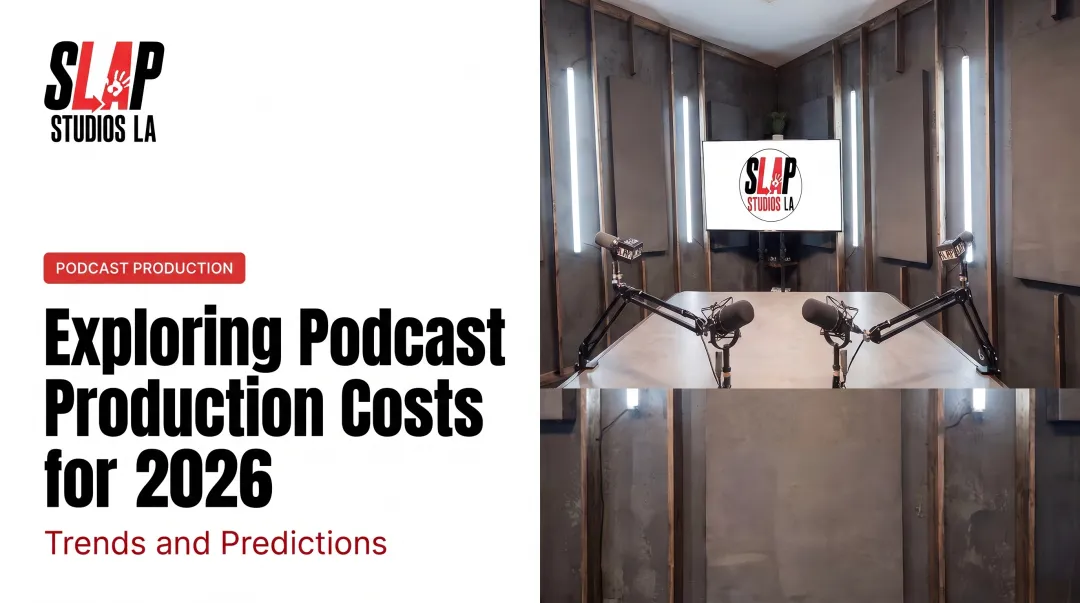
A home setup can get you recording. It can't give you a color-balanced multi-camera shoot with a treated room and an engineer running the board while you talk.
Local, in-person studios typically offer:
- Multi-camera setups for dynamic editing angles
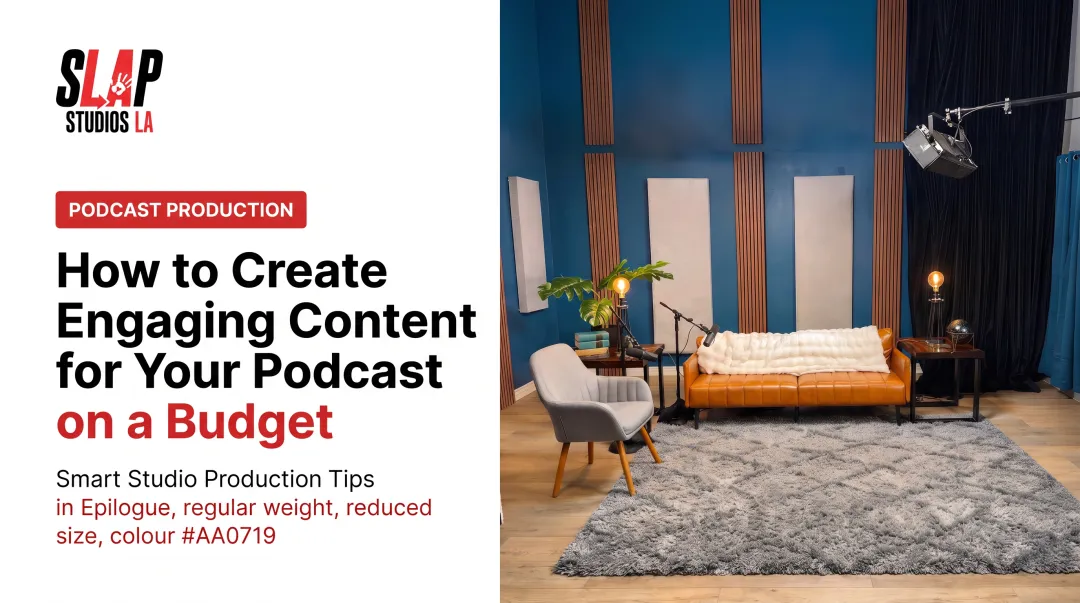
- Professional lighting rigs instead of a ring light and a prayer
- Acoustically treated rooms that actually sound like a podcast, not a bedroom
- On-site engineers who catch problems in real time, not after the fact
There's also a networking dimension that gets overlooked. Studios based in media hubs like Los Angeles, New York, and Austin sit inside a web of other podcasters, brands, and industry contacts. Los Angeles County's entertainment and media sector generates $117.2 billion in economic impact, and that concentration of activity means studios in these cities are plugged into people you want to meet.

SLAP Studios LA, based in West Hollywood, is a clear example of what a full-service local operation can look like. Rather than only renting a room, it runs three connected divisions under one roof: studio, agency, and brand deals. That setup serves entertainers, athletes, and influencers who need production tied to distribution and monetization—access a home studio or remote editor can't match.
Going local also means same-day, hands-on troubleshooting. If a mic cuts out or the lighting looks off, someone is physically there to fix it—no waiting on a support ticket.

What to Look for When Evaluating a Local Studio
Not every studio that shows up in your search delivers the same value. Here's what actually matters.
Production Quality & Equipment
Before booking, ask specifically about:
- Camera setup — multi-camera capability matters for editing flexibility—SLAP's Silver tier includes three Blackmagic Cinema 4K cameras
- Soundproofing and acoustic treatment — not just "a quiet room"
- Lighting — professional rigs (recallable presets are a good sign of a serious operation) versus a single overhead light
- What's bundled — is lighting, extra mic count, or camera add-ons billed separately, or included in the hourly rate?
Post-Production & Distribution Support
Editing, short-form clips, and publishing shouldn't be treated as premium upsells tacked onto a recording fee. They should be baked into what you're paying for at the higher service tiers. If a studio only hands you raw files and calls it done, you're still doing the hardest part yourself.
Monetization & Growth Support
The best studios don't stop at "here's your finished episode." They help you turn that episode into income through brand sponsorships, affiliate partnerships, or e-commerce revenue streams.
Ask any studio you're considering: "What happens to my content after we finish recording?"
Their answer tells you everything. A studio that just says "we'll send you the files" is a room-rental service. A studio that describes editing timelines, publishing platforms, and monetization pathways is running a real operation.
Team Experience & Portfolio
Check whether the people producing your show have actually produced their own. Ask for:
- Past client shows you can listen to or watch
- Direct referrals from current clients
- Proof of hands-on podcasting experience—not just equipment ownership
How to Find Local Podcast Production Companies
Finding candidates is easy. Finding good ones takes a bit more digging.
- Search Google Maps, not just Google — "Near me" search behavior has surged, and Google's local-search research found that half of people who do a local mobile search visit a business within a day. Filter by reviews and photos of the actual studio space.
- Check podcast-specific directories and communities — creator Facebook groups and subreddits like r/podcasting are full of firsthand studio experiences you won't find in a Google listing.
- Attend local creator meetups or industry events in hubs like LA, NYC, or Austin. Direct referrals from other podcasters carry more weight than any ad.
- Ask podcasters you already listen to where they record — especially ones based in your city.
- Schedule an in-person tour or trial call before committing. Most legitimate studios offer a no-pressure consultation. Use it to check the vibe, meet the staff, and see the equipment.

Understanding Podcast Production Costs
Pricing structures vary a lot between studios, so comparing "hourly rate" alone tells you almost nothing.
Common pricing models:
- Room-only rentals: Lower hourly cost, but you bring your own gear and handle all post-production yourself
- Full A/V recording: Camera, mic, and lighting included; raw files delivered after the session
- Full-service packages: Recording plus editing, typically with a composite edited file delivered within 48–72 hours
- Custom/retainer packages: Bundle recording, advanced editing, short-form clips, publishing, and monetization support
SLAP Studios LA's tiers run $79/hour for room-only, $139/hour for full audio/video with raw files, and $179/hour for full service with a Level 1 edit. Its top-tier Platinum package, which adds custom short-form clips, publishing, and brand-deal access, is quoted individually.

Before signing anything, ask for a full breakdown covering:
- Lighting and camera add-ons
- Number of revision rounds included
- Whether short-form clips and publishing are bundled or extra
Bundled models (studio, editing, distribution, and brand-deal access together) often deliver better long-term value than piecing services together à la carte — you avoid separate markups at every stage.
Red Flags to Watch For
Some warning signs show up before you even book a session:
- No trial or consultation offered before a long-term contract. A legitimate studio wants you comfortable first.
- Vague "custom quote only" pricing with no rate card, even a rough one
- No verifiable portfolio or reviews you can check independently online
- Upsell-heavy quotes that treat basic post-production as an add-on
If a studio can't show past work or quote a session without a "sales call," treat that as a clear warning sign.
Frequently Asked Questions
How much does it cost to hire a podcast producer?
Rates vary widely by service level, from basic per-episode editing to full-service monthly retainers. Full-service studios that bundle recording, editing, and distribution often deliver more value than piecemeal freelance pricing.
How can I find a producer for my podcast?
Combine local Google Maps searches with referrals from other podcasters and creator communities like r/podcasting. Always schedule a trial session or consultation call before committing long-term.
What is the best distributor for podcasts?
No single distributor fits every show. Most full-service studios include hosting and distribution to Spotify, Apple Podcasts, and YouTube in their package. According to Edison Research's Infinite Dial 2025, YouTube leads podcast listening at 33%, followed by Spotify at 26%.
What's the difference between a podcast studio and a podcast agency?
A studio provides the physical recording space and equipment. An agency handles editing, content strategy, publishing, and monetization. Full-service operations combine both.
Should I choose a local studio or work remotely with an editor?
Local studios offer in-person networking, professional gear, and hands-on guidance. Remote editors offer flexibility and often lower cost, but can't provide the same production environment or same-day troubleshooting.
Do podcast production companies help with monetization?
Full-service studios like SLAP Studios LA connect creators to brand sponsorships and affiliate revenue as part of their package. Basic room-rental studios typically stop at recording and editing, leaving monetization up to you.
Do you provide editing services?
Yes. The Gold package includes a Level 1 multi-camera post-cut edit with synchronized angles, color balancing, audio cleanup, leveling, and one composite file delivered within 72 hours of the session, excluding Sundays. More detailed Level 2 editing, B-roll, graphics, and short-form social clips are scoped through a custom Platinum package.
How long does editing take?
For Gold sessions, a Level 1 multi-camera composite edit is delivered within 72 hours of the session ending, excluding Sundays. Raw audio and separate camera-angle files from full-service sessions arrive by email within 48 hours. More involved Level 2 editing, B-roll, graphics, and short-form clips are scoped through a custom Platinum package, and the timeline is agreed as part of that scope.