
Too many new podcasters sink their entire budget into microphones and mixers, then wonder why episode five sounds just as flat as episode one. Better audio doesn't fix a boring conversation.
This guide covers the budget content strategies that actually move the needle: low-cost production tricks, smart repurposing tactics, and the moment when it makes sense to bring in pros like SLAP Studios LA.
Key Takeaways
- Engaging content depends on planning and storytelling, not expensive equipment
- Structured outlines, strong hooks, and guest variety drive faster listener retention
- One episode can become 10+ pieces of content through repurposing, at no extra cost
- Knowing when to upgrade to professional production accelerates growth and monetization
Why Content Quality Matters More Than Gear
Listeners forgive rough audio. They don't forgive boring, unfocused content.
Research on why people listen backs this up. Storytelling and social connection with hosts drive listening far more than production polish. People come back for the story and the host, not the mic.
Two different things get lumped together:
- Production value — how clean, polished, and professional an episode sounds or looks
- Content value — whether the episode is interesting, structured, and worth someone's time
Early on, prioritize content value. Production value can catch up later.
Platforms Reward Watch and Listen Time
Both Apple Podcasts and Spotify track completion and consumption closely. Apple ties engagement to popularity and completion to quality in its creator guidance. Spotify surfaces similar completion-rate data in its Engagement analytics.
Neither platform publishes an exact ranking formula. Episodes people finish still get more visibility. That's a content problem, not a gear problem.
Budget-Friendly Content Strategies That Drive Engagement
Nail Your Episode Structure and Hooks
The first 30-60 seconds decide whether someone keeps listening. Don't open with "hey guys, welcome back." Open with the most interesting thing you're going to say all episode.
A simple hook template:
- Tease the payoff — "By the end of this episode, you'll know exactly why..."
- Ask a provocative question — one your guest or topic directly answers
- Drop a bold claim or stat — something worth arguing with
Structure the whole episode like a story, not a hangout:
- Beginning — set up the topic and stakes
- Conflict/tension — introduce disagreement, a problem, or an unresolved question
- Resolution — land on an insight, takeaway, or answer

Rambling conversation feels natural to record but tedious to listen to. An outline fixes that without costing a cent.
Choose Formats That Cost Nothing But Boost Engagement
Some of the most engaging formats require zero budget:
- Solo Q&A episodes — answer listener questions directly, build a closer bond with listeners
- Listener-submitted topics — crowdsource what to cover next
- Hot takes — short, opinionated episodes on current events in your niche
- Revisit past episodes — bring fresh insight to something you covered a year ago
Trading guest appearances with other podcasters in your niche is another free tactic. You get new content and their audience gets introduced to your show. Everybody wins, nobody pays.
Use Storytelling Techniques
Three narrative tools that cost nothing:
- Open loops — tease something coming later in the episode to keep people listening
- Callbacks — reference an earlier moment or guest for continuity across episodes
- Personal anecdotes — specific, vulnerable stories beat generic advice every time
My Dad Wrote a Porno is worth studying here. Built on a simple, distinctive premise (reading a father's terrible erotica aloud), it grew to 430 million downloads over six series and seven years, sold out world tours, and landed an HBO special. That growth came from premise and voice, not production budget.
Batch Content Planning to Stay Consistent
Consistency isn't glamorous, but it works.
Spotify's own creator guidance warns that irregular scheduling is an early sign of "podfading" and recommends building an editorial calendar with episodes recorded ahead of launch. Batch-record 3-4 episodes in one sitting when you have momentum. Build a buffer so a bad week doesn't kill your release schedule.
Low-Cost Production Techniques for Professional-Sounding Episodes
You don't need a studio to sound decent. You need a quiet room and free software.
DIY acoustic treatment (under $50):
- Hang blankets in corners to absorb bouncing sound
- Record in a closet full of clothes — soft surfaces kill echo
- Put a blanket behind your microphone to prevent wall reflections
Note: this is acoustic treatment, not soundproofing. It won't block outside noise, but it will stop your voice from sounding like it's in a tin can.

Free editing tools:
- Audacity — free noise reduction, compression, and loudness normalization
- GarageBand — import voice recordings, cut mistakes, add free music, export finished audio
- Descript — text-based editing with a free plan for up to 60 media minutes per editor monthly
Video on a budget:
- Natural light near a window beats most cheap lighting kits
- A $20-30 ring light fixes harsh shadows fast
- Smartphone camera + lavalier mic gives you usable video without buying a full camera setup
Once your show gains real traction, a professional studio can raise quality without you building a full production team from scratch.
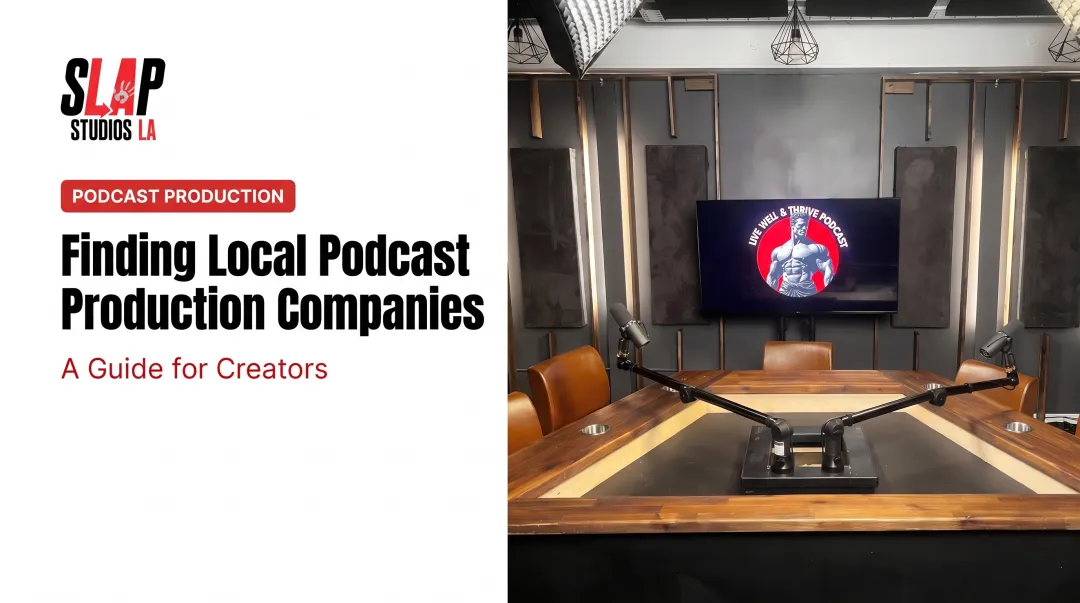
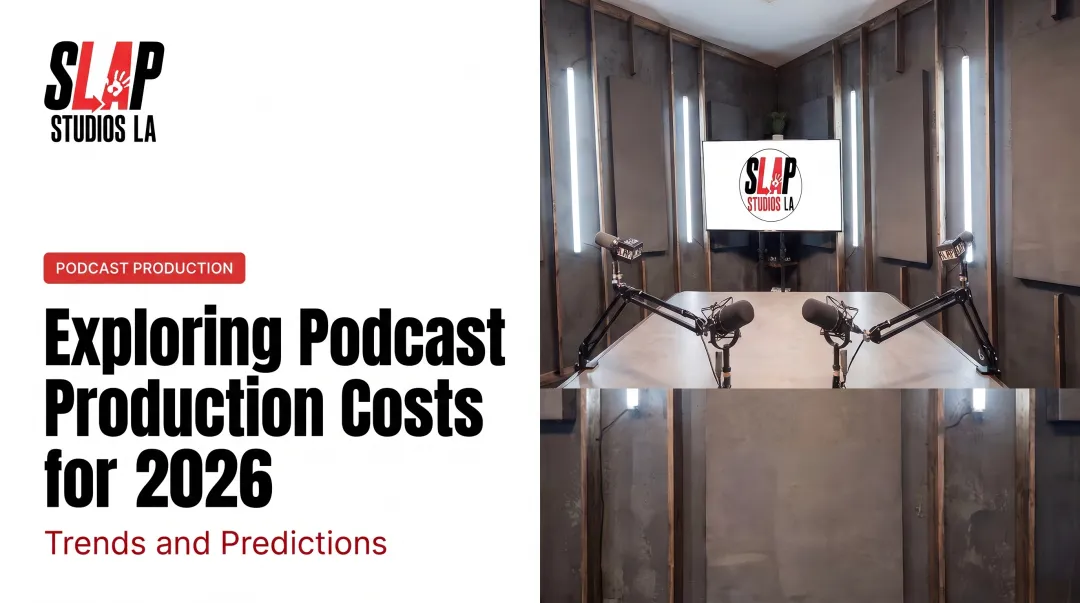
SLAP Studios LA's West Hollywood setup, for example, gives creators access to:
- Three Blackmagic Cinema 4K cameras
- Professional HD microphones with audio leveling
- A recallable Aputure lighting rig
That kind of multi-camera, lit, leveled session is tough to match on a home DIY budget.

Repurposing Content to Maximize Reach Without Extra Spend
Recording one episode should produce more than one episode's worth of content.
Slice it into short-form clips:
- Pull 3-5 quotable moments per episode for TikTok, Reels, and YouTube Shorts
- Use free tools like Descript or CapCut to cut and caption clips quickly
- Spotify's own guidance caps clips at 90 seconds for its recommendation surfaces
Extend the episode's life in text:
- Turn a key insight into a newsletter blurb
- Write a blog recap summarizing the main takeaways
- Post a standout quote as a standalone social graphic
Repurposing multiplies reach and cuts the pressure to invent something new every day. One recorded conversation can stock your content calendar for two weeks.

When to Invest in Professional Production Help
DIY works until it doesn't. Watch for these signs:
- Audience growth outpaces your editing skills: you spend more time cutting audio than planning content
- Brands are reaching out: you still have no system for sponsorships or affiliate deals
- Deadlines keep slipping: recording, editing, and publishing all fall on you alone At that point, piecing together freelancers gets expensive and inconsistent fast. An integrated model (studio, editing, distribution, and monetization under one roof) solves multiple bottlenecks at once. This is where SLAP Studios LA's three-in-one structure comes in:
- Studio handles recording with professional audio and multi-camera setups
- Agency turns that recording into multi-camera edits, short-form clips, publishing, and newsletters—typically in 48-72 hours
- Brand Deals connects clients to SLAP's owned portfolio (wellness, skincare, and apparel brands like 24k Wellness and 4G Apparel) for sponsorship and affiliate revenue that's hard to access solo That's the difference between managing five vendors and having one team move you from content to income.
Frequently Asked Questions
Is it worth starting a podcast in 2026?
Yes. Podcast consumption keeps climbing, with monthly US listenership around 55% in 2025, and the barrier to entry remains low. Success still depends on prioritizing content strategy over gear.
What is the cheapest way to record a podcast?
Record on a smartphone using a free app, in a closet or blanket-lined room to reduce echo. This costs close to $0 and produces usable audio.
How much does it cost to start a podcast on a budget?
Realistic starter budgets range from $100 to $500, based on published industry estimates. Spend most of it on a decent microphone and free editing software rather than a full studio setup.
How can I make my podcast sound more engaging without expensive editing?
Focus on a strong hook in the first minute, a clear structure with beginning, tension, and resolution, and light noise reduction using free tools like Audacity. Structure matters more than polish.
Do I need video to grow my podcast audience?
Video helps with discoverability on platforms like YouTube and Spotify, but audio-only shows still succeed. Add video when you have bandwidth, not before.
When should I upgrade from a home setup to a professional studio?
Upgrade when your audience outpaces your editing time, brands start reaching out, or you're missing deadlines managing everything solo. A production studio like SLAP Studios LA can help you decide if you're ready to scale.
What are the current hourly rates at SLAP Studios LA?
Bronze room-only rental is $89 per hour and includes the sound-treated space, lighting, sets, and props, but no equipment or engineer. Silver full-service recording is $139 per hour and adds three 4K cameras, professional microphones, Aputure lighting, an on-site engineer, and raw file delivery within 48 hours. Gold is $179 per hour and includes a Level 1 multi-camera edit delivered within 72 hours. Platinum content-engine packages are quoted after a consultation. Confirm current rates, minimum booking length, and any add-ons with the studio when you book.
Do you help first-time podcasters?
Yes. First-time creators are a core part of who the studio works with, and a full-service Silver or Gold session means you do not need to own equipment or know how to run a multi-camera setup. The on-site engineer handles cameras, microphones, and lighting during the session, and the team can talk you through format, episode structure, and what you will receive afterward before you book.