
Most creators and brands get stuck between those extremes, unsure what they're actually paying for. Pricing guides typically list editing rates and studio fees, but they rarely answer the real question: is this spend just content cost, or is it an investment that pays for itself?
This guide breaks down 2026 cost tiers, the trends reshaping pricing, and how to think about podcast spend based on monetization potential, not just download counts.
Key Takeaways
- Production costs in 2026 range from $0 DIY setups to $20,000+/month full-service retainers
- Video podcasting and AI-assisted editing are reshaping mid-tier pricing structures
- Podcast advertising revenue is projected to approach $2.6 billion by 2026, per IAB's 2024 revenue study
- Judge production spend by ROI from brand deals and revenue, not cost per episode alone
Podcast Production Cost Breakdown for 2026
Costs fall into four rough tiers, depending on how much support you need.
- DIY ($0–$500 setup): A basic USB mic and headphones run $70–$300, per Buzzsprout's equipment guide. You handle recording, editing, and distribution yourself.
- Budget editing services ($500–$1,500/episode): Freelance editors often charge $200–$500 per episode for cut-down and intro/outro work (Upwork marketplace listings). Full budget production packages—edit plus light packaging—usually land at $500–$1,500 per episode.
- Mid-tier agencies ($1,500–$5,000 per episode, or as a monthly retainer): Consistent editing, show notes, and distribution support on a schedule. Monetization strategy is still uncommon at this level.
- Full-service / strategic production ($5,000–$20,000+/month): Recording, editing, video, repurposing, distribution, and often brand-deal support under one retainer. Built for creators who want production and revenue support handled together.

One-Time vs. Recurring Costs
Don't confuse setup costs with ongoing expenses:
- One-time: Microphone, headphones, audio interface, lighting kit
- Recurring: Hosting platform fees, editing software subscriptions, retainer payments to editors or agencies
Video Adds Real Cost
Video podcasting typically adds 30–50% to base audio production costs, driven by multi-camera setups, syncing, color work, and short-form clip production for TikTok and YouTube Shorts.
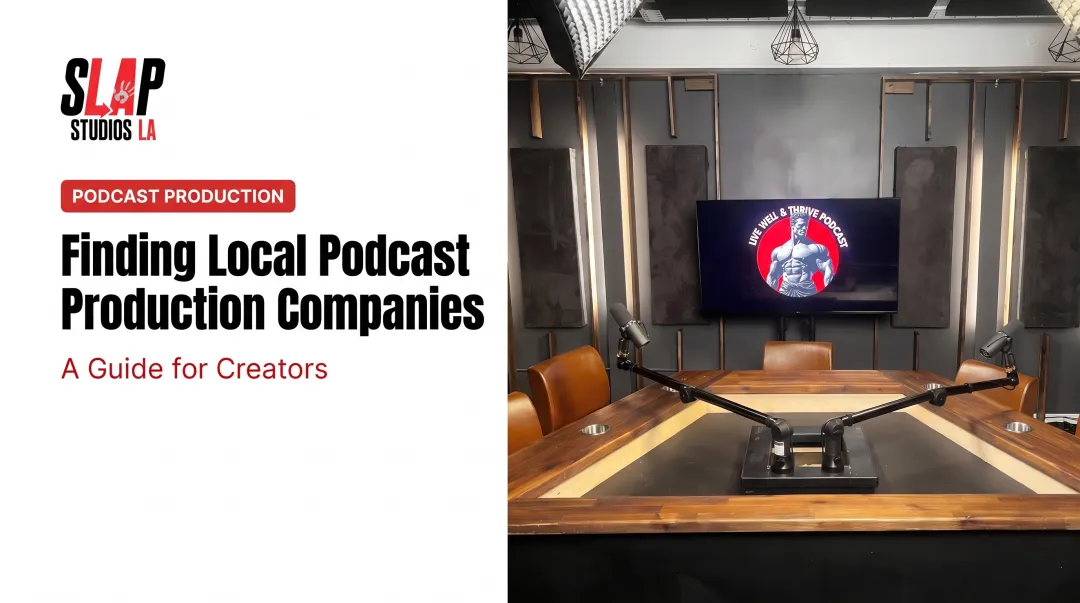
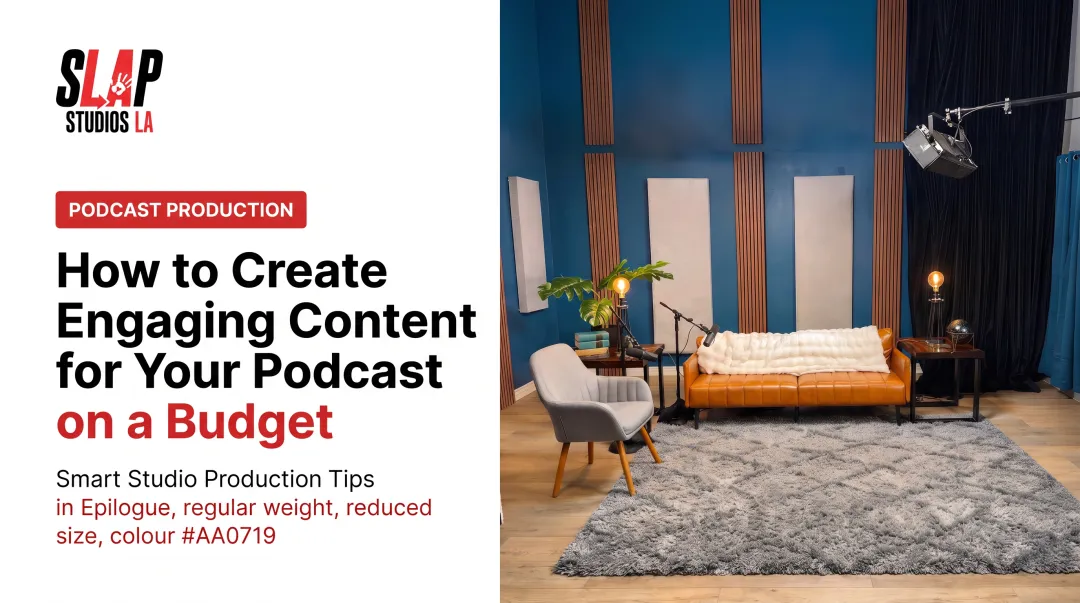
In studio markets like Los Angeles, session rates typically bundle recording, lighting, and multi-camera setups rather than charging piecemeal. At SLAP Studios LA in West Hollywood, for example, a full A/V session with three 4K cameras, professional microphones, and custom lighting runs $139/hour, with no separate line-item for the lighting rig or camera package.

What's Driving Podcast Costs in 2026: Trends and Predictions
Three forces are reshaping how much you pay and what you get for it.
AI Is Lowering Some Costs, Raising Others
AI-assisted editing tools are cutting basic post-production time. But they're also raising audience expectations for polish, so budgets often shift from rough cuts toward finishing work.
A 2023 survey found 42% of podcasters were already using AI tools, mostly for scripting and research, according to The Podcast Host. The catch: AI handles rough cuts, but professional color grading, B-roll integration, and sound design still require human editors.
Video-First Production Is Now the Default Expectation
Brands and creators now expect YouTube- and TikTok-ready content from every episode, not just an audio feed.
Spotify reported that daily video-podcast streams grew more than 39% year-over-year in 2024, per Spotify's newsroom. That shift is pushing short-form clip production from a nice-to-have into a standard line item.

Studios Are Bundling Monetization, Not Just Recording
The bigger shift: production studios are packaging brand-deal access, affiliate partnerships, and e-commerce integration into their offerings rather than selling recording time alone.
What this means for pricing:
- Per-episode flat fees are giving way to retainer models
- Retainers are tied more often to audience growth or revenue outcomes, not just deliverables
- Studios that connect production to monetization can justify higher retainers because they generate income, not just content
DIY vs. Hiring a Production Studio
DIY production isn't free. It costs your time.
Independent podcaster surveys show real hours per episode:
- 28% of creators spend 6-8 hours per episode on production
- Roughly 45% of audio-only creators spend more than six hours per episode, compared to 36% of video creators (Independent Podcaster Report 2025)
That's often 8-15 hours when you count planning, recording, editing, and publishing.
The Hidden Cost of DIY
If you're an executive, entrepreneur, or full-time creator, that time has a dollar value. Ten hours a week spent editing is ten hours not spent on guest outreach, sponsorship pitches, or running your business.
A modest monthly studio production fee often costs less than that opportunity cost. You trade a predictable package or hourly rate for recording, editing, and publishing handled by a team—plus more consistent quality when sponsors and higher-profile guests show up.

Signals it's time to graduate from DIY:
- Downloads have plateaued despite consistent publishing
- Sponsors or brands have started reaching out
- You're landing higher-profile guests who expect professional production quality
Turning Podcast Production Into Income, Not Just Content
Most cost guides stop at editing and distribution. That misses the biggest 2026 trend: production paired directly with monetization.
Traditionally, creators build an audience for months or years before monetization becomes realistic. Ad networks generally look for 1,000-5,000 downloads per episode, while direct sponsorships typically require 5,000-10,000+ downloads, according to Acast's monetization benchmarks. That's a long runway for a new show.
An integrated studio-agency-brand model changes that math. SLAP Studios LA's three-in-one operation in West Hollywood (studio, agency, and brand deals) gives creators access to sponsorships, affiliate deals, and TikTok Shop revenue from their first recording session.
That path skips the years of waiting required to hit traditional ad-network minimums.
Why bundled pricing beats piecing together freelancers:
- Premium equipment, multi-camera setups, and lighting with no hidden add-ons
- One flat cost for post-production, short-form clips, and email marketing that makes ROI easier to predict
- In-house brand portfolios (skincare, wellness, apparel) that match creators to sponsors by audience and style, not just follower count
Production quality feeds earning potential directly. Libsyn's advertiser data shows host-read spots typically run $18–$26 CPM, so a 20,000-download episode can generate roughly $500 from a single mid-roll ad, per Libsyn's monetization data. Better production and stronger brand alignment push that number higher, faster.

Choosing the Right Production Partner for Your Budget
Before you sign with a studio or agency, pressure-test scope, turnaround, and monetization support—not just the headline rate.
Questions to ask:
- What's included in the base rate versus billed as an add-on?
- Do you offer monetization or brand-deal support, or only recording and editing?
- What's your experience producing shows in my specific niche?
- What's the turnaround time for raw files, edited episodes, and short-form clips?
Red flags to avoid:
- Vague scope with no itemized breakdown of what you're paying for
- Promises of "guaranteed virality" or follower growth
- Pricing that seems too good to be true for full video production with editing
If those answers check out, look at how the partner is structured. Creators in hubs like Los Angeles often spend less overall with studios that combine space, production talent, and brand connections under one roof. Splitting the same work across a studio, editor, and marketing freelancer usually costs more in coordination time than it saves.
Frequently Asked Questions
What is the average cost to produce a podcast?
Costs range from $0-$500 for DIY setups to $1,500-$20,000+ monthly for professional retainers. The exact number depends on whether you need video, editing, distribution, or monetization support.
How much does a podcast studio cost?
Studio rental typically runs $50-$250 per hour, bundling recording space, equipment, and lighting rather than charging separately. Rates vary by market and what's included in the package.
Do you need a production company for a podcast?
No. A production company becomes worthwhile once quality, consistency, or monetization goals outgrow DIY. Many creators start solo and bring in help when sponsorship interest picks up.
Are podcasts actually profitable?
Profitability depends far more on monetization strategy (sponsorships, affiliates, e-commerce) than on raw download count alone. A smaller, well-monetized show often outperforms a larger show with no sponsorship strategy.
How much does a podcast with 50,000 listeners make?
Using standard CPM math of $18-$25 per thousand downloads, 50,000 downloads on a single mid-roll ad could generate roughly $900-$1,250 per episode. Direct brand deals, versus ad-network placements alone, can push that number higher.
Is it too late to start a podcast in 2026?
No. Podcast advertising revenue is still climbing toward $2.6 billion by 2026, and niche, well-produced, monetization-ready shows continue to find sponsorship and affiliate opportunities regardless of market maturity.
What are the current hourly rates at SLAP Studios LA?
Bronze room-only rental is $89 per hour and includes the sound-treated space, lighting, sets, and props, but no equipment or engineer. Silver full-service recording is $139 per hour and adds three 4K cameras, professional microphones, Aputure lighting, an on-site engineer, and raw file delivery within 48 hours. Gold is $179 per hour and includes a Level 1 multi-camera edit delivered within 72 hours. Platinum content-engine packages are quoted after a consultation. Confirm current rates, minimum booking length, and any add-ons with the studio when you book.
Do you charge different rates for evenings, weekends, or holidays?
The published Bronze, Silver, and Gold rates are the standard hourly prices. Because availability outside normal operating hours depends on scheduling and staffing, confirm any evening, weekend, or holiday session directly with the studio when booking so the timing and any applicable difference in cost are agreed in advance.